Online shopping has transformed rapidly over the last few years, and now Artificial Intelligence is shaping the next era of e-commerce growth. Whether you run a Shopify store, a WooCommerce website, a Magento marketplace, or a customised platform, AI tools for e-commerce can simplify operations, reduce human error, and significantly improve the customer experience.
As customers expect faster service, relevant recommendations, and personalised offers, AI becomes essential rather than optional. When used correctly, e-commerce automation enhances the efficiency of your online store while directly contributing to higher conversions and increased sales.

Quick Overview
- AI tools for e-commerce are transforming how online stores operate by automating critical functions and driving measurable sales growth.
- Automates Marketing: AI-powered tools run email campaigns, promotions, and targeting with minimal manual effort.
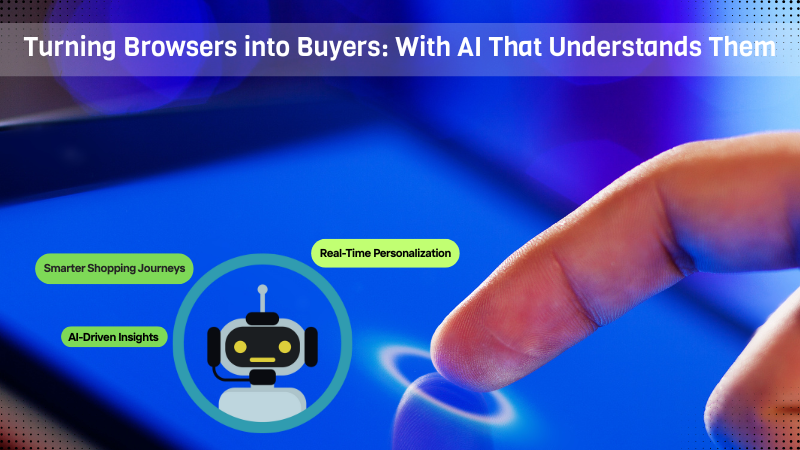
- Enhances Personalisation: Real-time product recommendations and adaptive content improve customer engagement and conversions.
- Optimises Pricing: Dynamic pricing engines adjust prices based on demand, behaviour, and market conditions.
- Improves Customer Support: AI chatbots deliver instant responses, resolve queries, and reduce support workload.
- Streamlines Operations: Predictive inventory management and demand forecasting reduce stock issues and operational inefficiencies.
- Scales Across Businesses: From affordable tools for small online stores to enterprise-grade platforms, AI adapts to different growth stages.
- Using AI in e-commerce allows businesses to operate smarter, respond faster to customer intent, and increase revenue without proportionally increasing effort or cost.
In an increasingly competitive digital marketplace, efficiency and personalisation are no longer optional—they are essential. AI-powered automation enables online retailers to analyse customer behaviour, predict buying patterns, and act in real time. When implemented correctly, AI does not replace human decision-making; it strengthens it, allowing brands to create seamless, personalised shopping experiences while focusing on strategic growth.
What Are AI Tools for E-Commerce?
AI tools for e-commerce are intelligent software solutions that automate repetitive tasks, analyse customer behaviour, personalise user journeys, and provide insights that empower better business decisions.
These tools study customer data such as browsing patterns, purchase history, product interactions, and engagement preferences to automate workflows and predict customer needs—making them most effective when implemented on a strong foundation such as Shopify website development in India that supports AI integrations, scalability, and performance.
For small shops wondering “can small shops afford AI tools?”—the answer is yes. Many platforms now offer free tiers or affordable entry points specifically designed for growing businesses.
Core Functions of AI in E-Commerce

AI is used across multiple areas in e-commerce, including:
- AI product recommendations based on browsing behavior
- Automated customer support and AI chatbots for e-commerce customer support
- Smart predictive inventory management and demand forecasting
- Dynamic pricing for e-commerce based on competition and trends
- Email automation for online stores and marketing campaigns
- Fraud detection and risk management
- Visual search for online stores and image recognition
- Personalised landing pages and product displays
Each of these functions helps create a smoother, personalised shopping journey while reducing the manual workload for store owners.
How E-Commerce Automation Works with AI?
How e-commerce automation works with AI is simpler than most people think. AI automation collects and analyses large amounts of customer and store data—clicks, time spent on pages, browsing behaviour, abandoned carts, product interests, and purchase patterns. AI then uses this information to automate decisions or actions that increase the chances of a sale.
Examples of AI in E-Commerce Marketing:
- Auto-sending abandoned cart emails:
If a customer leaves the website without completing a purchase, AI sends a reminder email, personalised discount, or WhatsApp message encouraging them to return. This abandoned cart automation can recover 10-15% of lost sales on average. - Auto-suggesting recommended products:
AI studies customer preferences and suggests relevant items that match their browsing history—creating personalised product recommendations that feel hand-picked. - Auto-adjusting product prices:
AI pricing optimisation tools enable dynamic pricing that changes based on demand, competitor pricing, seasonality, and profitability goals. - Predicting inventory needs:
If a product is selling quickly, AI alerts the store owner to restock before the item runs out, preventing lost revenue from stockouts.
This automation ensures that your store works in the background 24/7 without requiring constant manual monitoring.
Best AI Tools for Shopify Stores and Online Retailers
Below are some of the top AI tools for online stores that are widely used in the e-commerce industry
| Sr.No. | Tool | Key Use Area |
| 1 | Jasper AI | Content creation, product descriptions, social media copywriting |
| 2 | Shopify Magic | Automated product descriptions, personalized recommendations, smart store suggestions |
| 3 | Klaviyo AI | Email automation, campaign optimization, audience segmentation |
| 4 | Zoho SalesIQ | AI-powered customer support, live chat, chatbot flows |
| 5 | Tidio AI Chat | Conversational customer assistance and instant support |
| 6 | Pricelab & Omnia Retail | Dynamic pricing, competitor price tracking, profit optimization |
| 7 | Syte & ViSenze | Visual search and product discovery |
| 8 | Pimcore AI | Personalized product experiences and catalogue automation |
Each tool helps solve a specific challenge while improving the store’s overall efficiency. AI for Shopify has become particularly accessible through native integrations and third-party apps that require minimal technical knowledge to implement.
How to Choose the Right AI Tool?
Before choosing any AI tool, evaluate the following:
- Your business goals and current challenges
- Pricing compared to expected return on investment
- Compatibility with platforms like Shopify, WooCommerce, Magento, or custom websites
- Ease of integration and daily usage
- Customer support, training resources, and user reviews
- Scalability as your business grows
The right tool should not only automate tasks but also enhance customer experience and increase revenue. For those seeking affordable AI tools for small online stores, many platforms offer tiered pricing that scales with your business.
 AI Marketing Automation for E-Commerce
AI marketing automation helps online stores send the right message to the right customer at the right time. It allows deeper personalisation, precise targeting, and improved campaign performance.
Here’s how AI strengthens marketing:
- Personalised email campaigns based on customer behaviour
- Targeted discounts and product recommendations
- Predicting customer preferences through behavioural analysis
- Retargeting abandoned carts across email, SMS, and WhatsApp
- Improving Facebook and Google ad performance through predictive audiences
- Automating follow-ups for feedback and reviews
Example:
If a customer searches for “Vitamin C Serum” but leaves without buying, AI can automatically trigger:
- A reminder email showing benefits of the serum
- A personalised discount popup on the next visit
- A WhatsApp follow-up with similar product recommendations
This level of timely personalisation helps convert hesitant shoppers into customers.
 How to Use AI to Increase E-Commerce Sales?
Here are proven strategies that successful online stores use to boost sales with AI:
- Add an AI Chatbot for 24/7 Customer Support
Customers receive instant answers about orders, shipping, returns, and product details. AI chatbots for e-commerce customer support can handle 70-80% of common queries without human intervention.
- Use AI-Based Personalisation
Show products that match each customer’s browsing pattern, making the shopping experience more relevant. Personalised product recommendations can increase average order value by 10-30%.
- Automate Emails for Abandoned Carts, Feedback, and Upselling
AI sends personalised messages at the best time to increase conversion. Email automation for online stores ensures no opportunity is missed.
- Implement Dynamic Pricing
Real-time pricing helps stay competitive while maximising profit margins. The benefits of dynamic pricing for e-commerce include enhanced competitive positioning and increased margins during periods of high demand.
- Use Visual Search AI
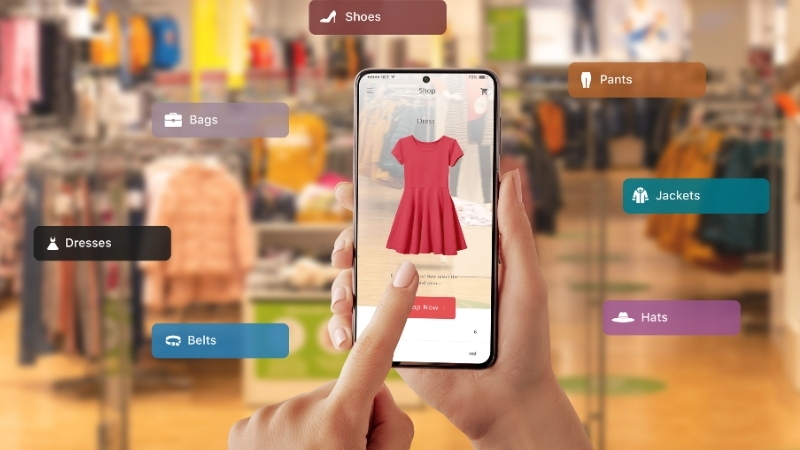
Customers can upload an image to instantly find similar products, improving their discovery experience. Visual search for online stores is particularly powerful in fashion, home decor, and furniture categories.
- Improve Website Performance with AI Optimisation Tools
Better speed and navigation lead to higher conversion rates through e-commerce website development that is optimised for performance, scalability, and user experience.
Result: A smoother shopping journey → higher conversions → increased repeat customers → stronger lifetime value.
How to Implement AI on a Shopify Store?
For Shopify merchants specifically, implementation is straightforward:
- Browse the Shopify App Store for AI-powered apps
- Install tools like Shopify Magic (built-in), Klaviyo, or Tidio
- Connect your store data (most apps do this automatically)
- Configure automation rules based on your goals
- Monitor performance and adjust settings
Best AI tools for Shopify stores integrate seamlessly with minimal technical expertise required.
Conclusion
AI is not replacing e-commerce owners; it’s simplifying their work, strengthening decision-making, and automating repetitive tasks. From personalised marketing and dynamic pricing to automated support and advanced product recommendations, AI tools help scale your online store without increasing operational workload.
If you want to stay competitive in today’s digital landscape, embracing AI is one of the smartest decisions you can make.
FAQs
Q1: What are the top AI tools for online stores?
Top options include Klaviyo AI, Jasper AI, Shopify Magic, Tidio Chatbot, Syte, and Zoho AI. The best choice depends on your specific needs—email marketing, content creation, or customer support.
Q2: How does AI improve conversion rates for e-commerce?
AI improves conversion rates by delivering personalised product recommendations, sending timely abandoned cart reminders, optimising pricing in real-time, and providing instant customer support through chatbots. These improvements create a smoother buying experience that reduces friction and hesitation.
Q3: Can small shops afford AI tools?
Yes! Many AI tools offer free plans with basic features, and paid plans begin at affordable monthly rates (often $10-50/month). The ROI typically justifies the cost within the first few months through increased sales and reduced manual work.
Q4: How to implement AI on a Shopify store?
Implementation is simple: browse the Shopify App Store, install AI apps like Shopify Magic or Klaviyo, connect your store data automatically, configure your automation preferences, and monitor results. Most tools require no coding knowledge.
Q5: What is the future of AI shopping agents?
AI shopping assistants will soon compare products, recommend options based on complex preferences, and even complete purchases for customers in real time—acting as personal shopping concierges available 24/7.